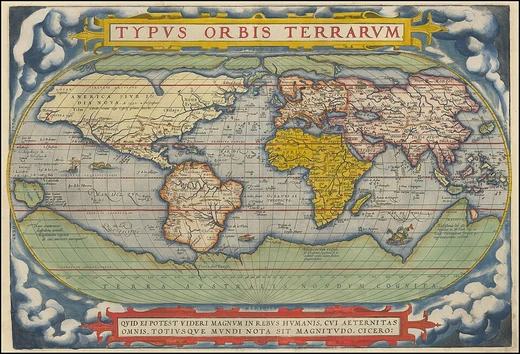
Antarctic
Polar region surrounding the South Pole, governed by international treaty.

The Antarctic is the polar region of Earth surrounding the South Pole, lying within the Antarctic Circle and diametrically opposite the Arctic. It comprises the continent of Antarctica, the Kerguelen Plateau, and other island territories on the Antarctic Plate or south of the Antarctic Convergence, covering about 20 percent of the Southern Hemisphere. The region is administered under the Antarctic Treaty System for all land and ice shelves south of 60°S latitude, and it has no permanent country or indigenous population.
- area
- 14 million km² (Antarctica continent surface)
- region_coverage
- 20% of Southern Hemisphere
- largest_protected_area
- 1.07 million km² (South Georgia and South Sandwich Islands Marine Protection Area)
- governance
- Antarctic Treaty System (south of 60°S)
Reader's Guide
The Antarctic region is significant as a unique biogeographic realm and a critical area for climate change research. Melting of the Antarctic ice sheet has high potential to contribute to global sea level rise and disrupt Southern Ocean overturning circulation, affecting local climate and marine ecosystems. The Antarctic Treaty System governs all land and ice shelves south of 60°S, while islands north of that latitude but south of the Antarctic Convergence fall under national jurisdictions. The region has no permanent population, only transient scientific and support personnel at research stations.
Did You Know?
- The Antarctic region covers about 20 percent of the Southern Hemisphere, with the continent itself comprising 5.5 percent (14 million km²).
- The Antarctic Convergence is a transition zone approximately 32 to 48 km wide where cold Southern Ocean waters meet warmer northern waters.
Frequently Asked Questions
What is the Antarctic?
The Antarctic is the polar region encircling the South Pole, bounded by the Antarctic Circle and sitting directly opposite the Arctic. It encompasses the continent of Antarctica, the Kerguelen Plateau, and various island territories on the Antarctic Plate or south of the Antarctic Convergence.
How large is the Antarctic region?
The Antarctic continent's surface spans roughly 14 million square kilometers, and the broader region accounts for about one-fifth of the entire Southern Hemisphere. Its largest single protected zone is the South Georgia and South Sandwich Islands Marine Protection Area at 1.07 million square kilometers.
How is the Antarctic governed?
All land and ice shelves south of 60°S latitude fall under the Antarctic Treaty System, an international framework that manages the region collectively. No single nation claims sovereignty, and there is no permanent resident or indigenous population.
More in Physical Geography & Elevation 1-24
Elsewhere in the Physical Geography & Elevation universe
Spotted an error? Know more?
This is a living reference — every entry is fact-audited, and reader corrections feed straight into our audit queue. Suggest an edit · See this site's audit record